
Synbio Signs Agreement for a Proof-of-Concept Clinical Trial to Evaluate a Unique AI-Based Facial Analysis Screening Software for Mental Health Disorders
 | |||||||||
 | |||||||||
-
Synbio has signed a Master Services Agreement with a leading Australian clinical research organization, CRO Services Pty Ltd, a wholly owned subsidiary of ASX-listed Resonance Health Ltd (ASX: RHT).
-
Under the agreement, Resonance will conduct a proof-of-concept clinical trial to assess the efficacy of FacialDx Incorporated (FacialDx) NIMSTM (Non-invasive Medical Screening) technology and evaluate its performance in real-world clinical conditions.
-
Facial DX NIMSTM is a proactive, non-invasive AI-powered wellness technology that analyzes facial imagery to potentially assist in the early identification of life-changing health conditions such as Post-Traumatic Stress Disorder and Major Depressive Disorder.
-
Mental health is discussed in approximately 150 million1 clinical interactions annually in the U.S., where mental health is discussed, with additional opportunities in corporate wellness programs.
-
Successful validation positions Synbio to pursue commercialization across both clinical and corporate settings, creating considerable opportunities for significant shareholder value.
New York, NY – January 15, 2026 – TheNewswire - Synbio International Inc. (OTC: SYIN) (“Synbio” or the “Company”), a medical technology company focused on clinically validated AI diagnostics, today announced that it has executed a Master Services Agreement (“MSA”) with CRO Services Pty Ltd (“CRO Services”), a leading Australian clinical research organization and a wholly owned subsidiary of Resonance Health Ltd (“Resonance”) (ASX: RHT).
Under the agreement, CRO Services will conduct a proof-of-concept clinical trial in Australia to evaluate FacialDx’s proprietary NIMS™ (Non-invasive Medical Screening) technology.
The technology is a proactive AI-powered facial analysis medical health technology that identifies early-stage features associated with (amongst other medical indications), two highly prevalent and costly mental health conditions: Post-Traumatic Stress Disorder (PTSD) and Major Depressive Disorder (MDD).
Advancing Toward Clinical Validation
The trial is designed to assess the accuracy, reliability, and clinical utility of the technology in real-world clinical conditions. While internal non-clinical testing has demonstrated promising performance, this study represents a critical step toward clinical validation - an essential requirement for potential regulatory engagement and commercial adoption.
Resonance Health brings extensive experience in conducting clinical studies and supporting medical technologies through regulatory pathways, including prior engagement with the U.S. Food and Drug Administration (FDA). Conducting the trial in Australia offers meaningful efficiencies in cost and timeline while maintaining internationally recognized clinical and ethical standards.
Addressing a Large and Underserved Market
Mental health conditions are among the most common and costly challenges facing healthcare systems and employers. In the United States alone, mental health is discussed or assessed in an estimated 150 million2 primary care visits annually - excluding specialty visits, emergency care and others.
Despite this scale, mental health screening today remains heavily reliant on subjective questionnaires and self-reporting, which can be influenced by stigma, recall bias, and clinician interpretation.
The technology is designed to supplement — not replace — clinical judgment by providing objective biological data derived from facial analysis. If clinically validated, it may represent the world’s first objective screening test for a mental health condition, enabling earlier identification, more consistent screening, and improved decision-support across both clinical and corporate settings.
Beyond screening and subject to clinical validation, the technology may be used repeatedly over time to assist clinicians in objectively assessing patient progress and treatment response.
The technology is proactive, non-invasive, rapid, and scalable, with potential applications across clinical healthcare settings (i.e. primary care, behavioural health, psychiatry); corporate wellness and occupational health programs and high-risk industries where early identification may improve safety, resilience, and productivity.
Together, these markets represent a substantial and complementary long-term opportunity for Synbio.
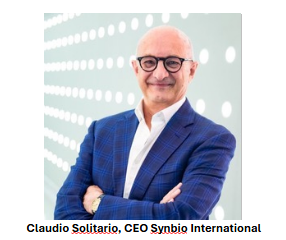
“This agreement marks a major milestone for Synbio,” said Claudio Solitario, Chief Executive Officer of Synbio International. “Clinical validation is the foundation for regulatory engagement and commercial deployment. The need for objective, scalable mental health screening tools has never been greater - Major Depressive Disorder is now one of the leading causes of disability among Americans aged 15 to 44.”
“Our focus is on empowering clinicians with an affordable, easy-to-use tool that enhances existing workflows,” Solitario added. “Importantly, NIMS is based on the patient’s own biological data and does not rely solely on subjective interpretation, addressing a long-standing industry challenge.”
The trial is expected to commence in early 2026 and conclude later in the year. Data generated from the study is intended to inform future regulatory submissions and guide commercialization strategy in both healthcare and corporate markets.
The trial will be conducted under Synbio’s clinical and regulatory leadership, pursuant to its agreement with FacialDx Inc., the developer of the underlying facial analysis technology. Final execution remains subject to completion of the Statement of Work, cost schedules, and a Clinical Trial Research Agreement under the MSA framework.
###
About Synbio International Inc.
Synbio International Inc. (OTC: SYIN) is a medical research and technology company focused on clinically validated AI-driven medical diagnostics. Through strategic partnerships and research collaborations, Synbio aims to bridge the gap between wellness and medicine, developing science-based solutions that improve quality of life and empower healthcare providers.
For media inquiries, please contact:
Synbio International Inc.
info@synbiointl.com
(646) 359-4854
www.synbiointl.com
Forward-Looking Statements
This press release contains “forward-looking statements” within the meaning of the safe harbor provisions of the Private Securities Litigation Reform Act of 1995. Forward-looking statements can be identified by words such as: “anticipate,” “intend,” “plan,” “goal,” “seek,” “believe,” “project,” “estimate,” “expect,” “strategy,” “future,” “likely,” “may,” “should,” “will” and similar references to future periods. Examples of forward-looking statements in this press include, among others, statements about our renegotiated settlement agreement. Forward-looking statements are neither historical facts nor assurances of future performance. Instead, they are based only on our current beliefs, expectations, and assumptions regarding the future of our business, future plans, and strategies, projections, anticipated events and trends, the economy and other future conditions. Because forward-looking statements relate to the future, they are subject to inherent uncertainties, risks and changes in circumstances that are difficult to predict and many of which are outside of our control. Our actual results and financial condition may differ materially from those indicated in the forward-looking statements. Therefore, you should not rely on any of these forward-looking statements. Important factors that could cause our actual results and financial condition to differ materially from those indicated in the forward-looking statements include, among others, the following: our limited operating history; our dependence on third parties for many aspects of our business; general market and economic conditions; technical factors; the availability of outside capital; our receipt of revenues; legislative developments; changes in our expenditures and other uses of cash; our ability to find, recruit and retain personnel in sufficient numbers to support our growth; our ability to manage growth; and general market, economic and business conditions. Any forward-looking statement made by us in this press release is based only on information currently available to us and speaks only as of the date on which it is made. We undertake no obligation to publicly update any forward-looking statement, whether written or oral, that may be made from time to time, whether as a result of new information, future developments or otherwise.
1 In the U.S., there are approximately 1.0 billion physician office visits per year (ambulatory care) in which patients see a doctor or other health professional. A nationally representative analysis found that about 15.9% of primary care visits address a mental health concern — meaning mental health was talked about at some point in the visit. Using this proportion with the approximate 1.0 billion office visits suggests an estimated 150 million primary care visits annually involve mental health discussion — though this excludes specialty visits, emergency care, paediatrics, and others. Source: National Center for Health Statistics – Ambulatory Care Use and Physician Office Visits.
2 In the U.S., there are approximately 1.0 billion physician office visits per year (ambulatory care) in which patients see a doctor or other health professional. A nationally representative analysis found that about 15.9% of primary care visits address a mental health concern — meaning mental health was talked about at some point in the visit. Using this proportion with the approximate 1.0 billion office visits suggests an estimated 150 million primary care visits annually involve mental health discussion — though this excludes specialty visits, emergency care, paediatrics, and others. Source: National Center for Health Statistics – Ambulatory Care Use and Physician Office Visits.