
Archive
Oceanic Iron Ore CEO Chris Batalha Talks About Global Demand Drivers for Iron Ore
 | |||||||||
 |  | ||||||||
Vancouver, BC – TheNewswire - October 2 2026 – Global Stocks News - Sponsored content disseminated on behalf of Oceanic Iron Ore. On September 29, 2026, Oceanic Iron Ore (TSXV: FEO) issued a message to shareholders entitled “Global Demand Drivers for Iron Ore”.
Oceanic is focused on the development of its 100% owned Hopes Advance, Morgan Lake and Roberts Lake iron ore projects located on the coast, in the Labrador Trough in Québec, Canada.
The flagship Hopes Advance Project has a NI 43-101 Measured & Indicated resource of about 1.36 billion tonnes at a head grade of 32.1% Fe. The project is located at tidewater. The PEA highlights that Oceanic will not require a railroad to get its iron ore to market, significantly reducing capital expenses and operating costs.

Click Image To View Full Size
Global Demand Drivers for Iron Ore
Chris Batalha, CEO
Iron ore is not one of the sexy metals like gold or silver. People don’t chat about it at dinner parties or walk the red carpet flaunting their pig iron earrings. Many investors aren’t sure exactly what it is or what it is used for.
“Iron ore is not something that dreams are made of,” confirmed Oceanic's co-founder, Frank Giustra, in a recent ITM interview. “It’s a bulk commodity. It doesn’t drive men to do crazy things. But in a world that is industrializing, iron ore is crucial.”
Trace amounts of iron ore are used in pigments and cosmetics, but 98% of all mined iron ore is smelted to create hot metal – a high-carbon intermediate product, which is then refined into steel.
Due to its high tensile strength, durability and relatively low cost, steel serves as the structural backbone for modern civilization. Every year, about 1.9 billion tonnes of crude steel is produced globally.
Buildings and infrastructure account for 50% of all global steel demand. I-beams and columns require steel. So does the rebar embedded in concrete used to build roads, bridges, and foundations. In a typical skyscraper, structural steel accounts for 10% of the overall construction cost.
About half of the weight of a car is steel, providing strength to the chassis, door panels and engine components. Steel is also used to make train tracks, cargo ships, oil tankers and wind turbines.
China controls about 52% of global steel production and is the largest seaborne iron ore importer. India’s steel production is growing about 6% year-over-year. In 2025, India’s domestic shortages of high-grade iron ore forced a spike in imports to meet demand. India's seaborne iron ore imports just hit a 7-year high.
Countries like Vietnam, Indonesia, Malaysia, and the Philippines are experiencing a boom in infrastructure and industrial construction. These four countries have a combined population of 530 million people. Southeast Asia lacks large-scale domestic iron ore production. Seaborne iron ore imports in the region are growing 3% annually.
Australia (980 million tonnes/year) is the world’s top iron ore producer, followed by Brazil (420 million tonnes/year) and India (310 million tonnes/year). Canada produces 70 million tonnes of iron ore per year. We are the 8th largest producer of iron ore, with the 6th largest global reserves. Québec produces 60% of Canadian iron ore, with Newfoundland, Labrador & Nunavut responsible for the other 40%.
Most Canadian iron ore is exported to China, followed closely by Europe, where its high-grade specifications are in demand.
Unlike precious metals, which are typically sold in coin or bar form at 99.9% purity, the price of iron ore is mine-specific, depending on iron content and impurity levels.
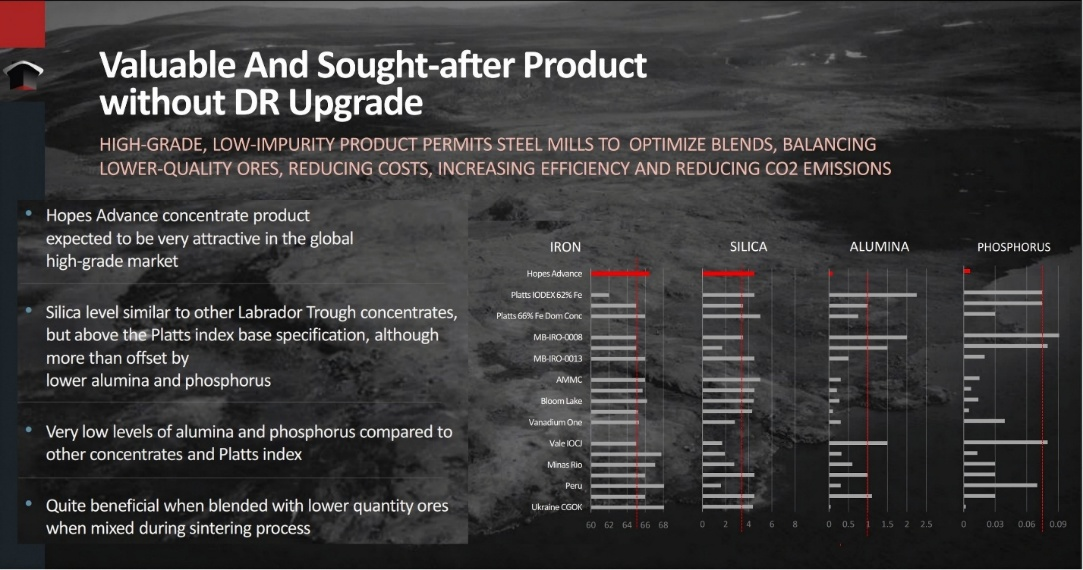
In the next message, I will explain why Oceanic’s type of iron ore is selling at a premium on international markets.
By Chris Batalha
CEO of Oceanic Iron Ore
Click here to visit Oceanic Iron Ore’s website.
Click Image To View Full Size
Contact: guy.bennett@globalstocksnews.com
Disclaimer: Oceanic Iron Ore paid Global Stocks News (GSN) $1,200 for the dissemination of this content.
Full Disclaimer: GSN researches and fact-checks diligently, but we cannot ensure our publications are free from error. Investing in publicly traded stocks is speculative and carries a high degree of risk. GSN publications may contain forward-looking statements such as “project,” “anticipate,” “expect,” which are based on reasonable expectations, but these statements are imperfect predictors of future events. When compensation has been paid to GSN, the amount and nature of the compensation will be disclosed clearly.
